Menu

Blog — rinosbike.uk

We've just returned from Eurobike and our heads are still processing everything. Five days in Frankfurt, bicycles everywhere, and far too much coffee.

We packed up our bicycles and headed to the world's largest cycling trade show. Eurobike 2025 in Frankfurt — the place where the entire industry gathers to see what's coming next. We'd been working towards this event for months, wondering how we'd hold our own among the big names.

Life outdoors

We found ourselves in the outdoor area, which turned out to be an excellent thing. Walking through the first day and seeing our bicycles under real trees instead of artificial exhibition lighting — that felt right. The action happens outside: not in a sterile exhibition hall.

The outdoor zone had a different energy. Less corporate, more authentic. That's where the test track was, and the brands that build things for people who really ride hard. Our kind of people.

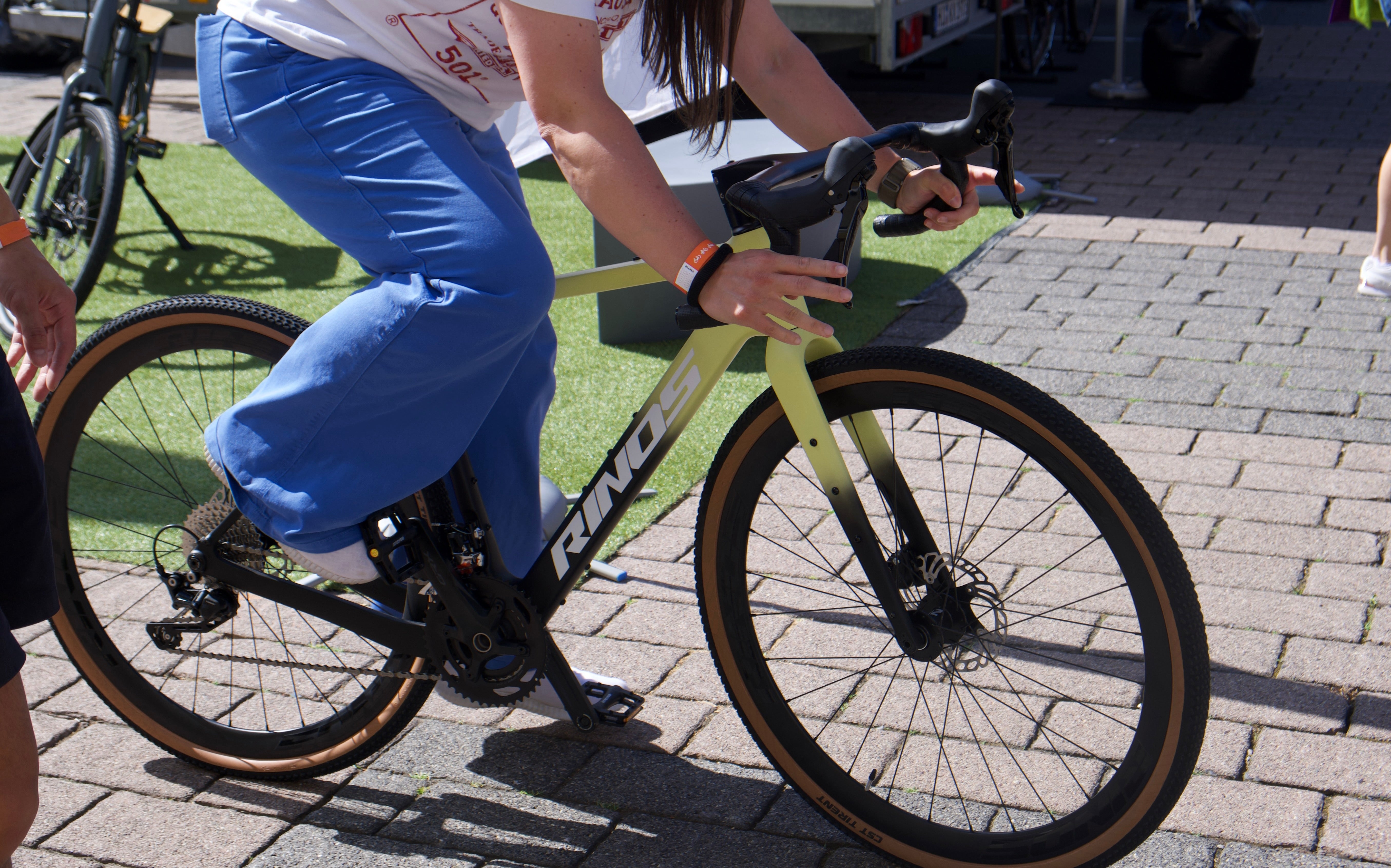
While other brands had their indoor palaces with LED walls and demo stations, we had grass and real sunlight. Different approaches, but ours suited us. When someone picked up one of our bicycles to examine it, they saw it the way it should be seen — in the real world, not under artificial light.

The big show

The main halls were impressive, that's undeniable. Some booths were bigger than most bike shops. Walking through it all, you realise how much money circulates in this industry.

But after a while, everything starts to look the same. Booth after booth of polished presentations, each claiming their latest product will revolutionise cycling. Hard to judge when everything is staged so perfectly.

Outside, the conversations were different. More relaxed. People stopped, looked at our bicycles and asked genuine questions. Not because we had an extraordinary sales pitch, but because they could see we build these machines ourselves.

Real conversations

Visitors spent a lot of time with us, asking questions about frame construction, why we'd chosen certain tube shapes, how the bike handles on loaded tours. Technical topics, but practical ones too — they wanted to know whether they'd actually enjoy riding these bicycles, not just whether they should buy them.

We talked about European manufacturing, sustainable materials, about building bicycles that last. No revolutionary technology, just solid engineering.

The conversations developed naturally. No script, no corporate language. Just cyclists talking to other cyclists about what works and what doesn't.

The weather and reality

Thursday brought proper German rain. But in the outdoor zone, we simply carried on. Rain jackets on, kept talking about bicycles, soaked through just like on a regular ride.

Some visitors mentioned how refreshing that was. Seeing bicycles in real conditions, not in perfect showrooms. If you're buying a bicycle for adventures, you should see it get wet.

The rain also filtered out the merely curious. The people who stayed, who kept asking questions while getting drenched — they got it. They understood that cycling isn't always comfortable, and they appreciated gear that works when things get tough.

What we learned

Eurobike taught us that people are hungry for authentic stories. Not marketing stories — real ones. Where these bicycles come from, why we make certain decisions, what it feels like to actually ride them. The gravel scene is growing fast, but it's driven by word of mouth, not corporate campaigns.

Sustainability was a constant theme in the conversations. People asked questions about materials, production methods, what happens when parts wear out. Being able to speak honestly about our European assembly, our repair philosophy, our material choices.

The moments that really matter

Forget the industry awards and product launches. The real highlights were simpler. Like when an Austrian retailer decided to carry our bicycles after watching us answer a technical question. Or when a weekend rider realized our approach to bicycle development was exactly what he had been looking for.

These connections don't happen in boardrooms. They happen when you can look someone in the eye and say: “Yes, I helped design that frame” or “We tested that geometry on trails near our workshop.”

The Reality of the Industry

What impressed us most at Eurobike: despite all the corporate spending and flashy screens, the industry is still driven by people who simply love to ride. Strip away the marketing budgets and LED walls, and what remains are cyclists talking to other cyclists about what matters to them.

Big brands push technology forward — they have resources we don't. But there's still room for brands that focus on the rider experience instead of the profit margin. Eurobike proved that.

To Wrap Up

Sunday evening, tearing down our booth, we felt good about what we had accomplished. We met people who share our passion for adventure cycling, and that's what really matters.

The industry may be dominated by corporate giants, but there's room for brands that do things their own way. Our presence at Eurobike proved that the cycling community values authenticity, especially when it comes to gear they rely on for real adventures.

What Comes Next

Speaking of real work: we have exciting things in the pipeline. The Odin 6 and 6.1 are finally done — our road bikes with Di2 integration that we've been perfecting for months. The Sandman 8 is also on its way, taking our gravel platform with electronic shifting to the next level. All three will be available starting next month — good timing after the interest we saw in Frankfurt.

By the way, the interest wasn't just talk — both of our demo bikes sold right at Eurobike. Nothing says “we're onto something” quite like people who want to ride your bikes home immediately.

The Atlas is a different story. Our titanium bike arrives in October, because, well, titanium doesn't hurry for anyone. These frames take time to get right, and we won't cut corners just to meet shorter deadlines. People who are passionate about titanium understand that good things take time.

To everyone who stopped by our booth, shared a story, or simply appreciated what we build — thank you. You reminded us why we founded Rinos.

The big show is over. Time to get back to building bikes that make adventures possible.

See you on the trails soon.

All posts

Rinos at Eurobike 2025: A Report from Frankfurt

July 09, 20256 min read
Rinos at Eurobike 2025: A Report from Frankfurt

We've just returned from Eurobike and our heads are still processing everything. Five days in Frankfurt, bicycles everywhere, and far too much coffee.

We packed up our bicycles and headed to the world's largest cycling trade show. Eurobike 2025 in Frankfurt — the place where the entire industry gathers to see what's coming next. We'd been working towards this event for months, wondering how we'd hold our own among the big names.

Life outdoors

We found ourselves in the outdoor area, which turned out to be an excellent thing. Walking through the first day and seeing our bicycles under real trees instead of artificial exhibition lighting — that felt right. The action happens outside: not in a sterile exhibition hall.

The outdoor zone had a different energy. Less corporate, more authentic. That's where the test track was, and the brands that build things for people who really ride hard. Our kind of people.

While other brands had their indoor palaces with LED walls and demo stations, we had grass and real sunlight. Different approaches, but ours suited us. When someone picked up one of our bicycles to examine it, they saw it the way it should be seen — in the real world, not under artificial light.

The big show

The main halls were impressive, that's undeniable. Some booths were bigger than most bike shops. Walking through it all, you realise how much money circulates in this industry.

But after a while, everything starts to look the same. Booth after booth of polished presentations, each claiming their latest product will revolutionise cycling. Hard to judge when everything is staged so perfectly.

Outside, the conversations were different. More relaxed. People stopped, looked at our bicycles and asked genuine questions. Not because we had an extraordinary sales pitch, but because they could see we build these machines ourselves.

Real conversations

Visitors spent a lot of time with us, asking questions about frame construction, why we'd chosen certain tube shapes, how the bike handles on loaded tours. Technical topics, but practical ones too — they wanted to know whether they'd actually enjoy riding these bicycles, not just whether they should buy them.

We talked about European manufacturing, sustainable materials, about building bicycles that last. No revolutionary technology, just solid engineering.

The conversations developed naturally. No script, no corporate language. Just cyclists talking to other cyclists about what works and what doesn't.

The weather and reality

Thursday brought proper German rain. But in the outdoor zone, we simply carried on. Rain jackets on, kept talking about bicycles, soaked through just like on a regular ride.

Some visitors mentioned how refreshing that was. Seeing bicycles in real conditions, not in perfect showrooms. If you're buying a bicycle for adventures, you should see it get wet.

The rain also filtered out the merely curious. The people who stayed, who kept asking questions while getting drenched — they got it. They understood that cycling isn't always comfortable, and they appreciated gear that works when things get tough.

What we learned

Eurobike taught us that people are hungry for authentic stories. Not marketing stories — real ones. Where these bicycles come from, why we make certain decisions, what it feels like to actually ride them. The gravel scene is growing fast, but it's driven by word of mouth, not corporate campaigns.

Sustainability was a constant theme in the conversations. People asked questions about materials, production methods, what happens when parts wear out. Being able to speak honestly about our European assembly, our repair philosophy, our material choices.

The moments that really matter

Forget the industry awards and product launches. The real highlights were simpler. Like when an Austrian retailer decided to carry our bicycles after watching us answer a technical question. Or when a weekend rider realized our approach to bicycle development was exactly what he had been looking for.

These connections don't happen in boardrooms. They happen when you can look someone in the eye and say: “Yes, I helped design that frame” or “We tested that geometry on trails near our workshop.”

The Reality of the Industry

What impressed us most at Eurobike: despite all the corporate spending and flashy screens, the industry is still driven by people who simply love to ride. Strip away the marketing budgets and LED walls, and what remains are cyclists talking to other cyclists about what matters to them.

Big brands push technology forward — they have resources we don't. But there's still room for brands that focus on the rider experience instead of the profit margin. Eurobike proved that.

To Wrap Up

Sunday evening, tearing down our booth, we felt good about what we had accomplished. We met people who share our passion for adventure cycling, and that's what really matters.

The industry may be dominated by corporate giants, but there's room for brands that do things their own way. Our presence at Eurobike proved that the cycling community values authenticity, especially when it comes to gear they rely on for real adventures.

What Comes Next

Speaking of real work: we have exciting things in the pipeline. The Odin 6 and 6.1 are finally done — our road bikes with Di2 integration that we've been perfecting for months. The Sandman 8 is also on its way, taking our gravel platform with electronic shifting to the next level. All three will be available starting next month — good timing after the interest we saw in Frankfurt.

By the way, the interest wasn't just talk — both of our demo bikes sold right at Eurobike. Nothing says “we're onto something” quite like people who want to ride your bikes home immediately.

The Atlas is a different story. Our titanium bike arrives in October, because, well, titanium doesn't hurry for anyone. These frames take time to get right, and we won't cut corners just to meet shorter deadlines. People who are passionate about titanium understand that good things take time.

To everyone who stopped by our booth, shared a story, or simply appreciated what we build — thank you. You reminded us why we founded Rinos.

The big show is over. Time to get back to building bikes that make adventures possible.

See you on the trails soon.

Did you enjoy this article?